Bedtime Reading: Why It Matters More Than You Think
Why a familiar story can support connection, language, regulation, and a calmer transition from the energy of the day into sleep.
By Angie Knight · 7 min read
In this article
- A familiar transition into sleep
- Connection before goodnight
- A gentle opening for feelings
- Following a story, at your child’s pace
- Make reading work for your child
- Language without the quiz
- A shared plan for parents and nannies
- One supportive part of bedtime
- A note for nannies and caregivers
- Permission to keep it simple
- A glimpse into our evenings
A Modern Help guide for parents, grandparents, nannies and other caregivers
By the end of the day, you may not have much energy left. Dinner, bath time, pajamas, brushing teeth, and getting everyone into bed can already feel like a lot.
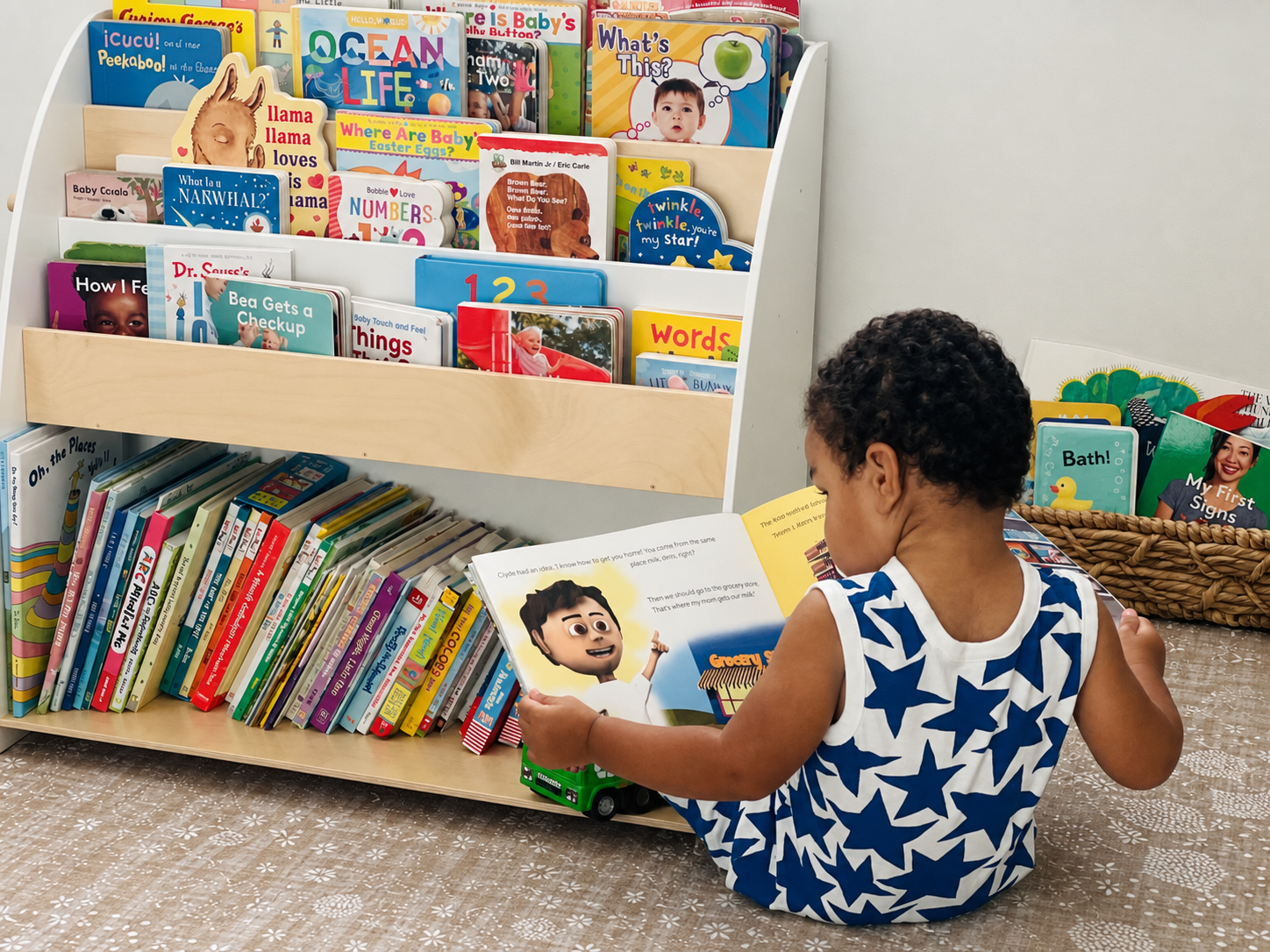
Here's the good news: bedtime reading doesn't need to become another thing you're trying to get perfectly right. It can be one familiar book and a few minutes together. Even brief shared reading is worthwhile, and you don't have to finish every story for that time to count.¹
For parents and nannies alike, it's an opportunity to slow down with a child before saying goodnight. There's learning happening, of course, but there's also time to listen, get comfortable, and simply enjoy each other.
The goal is a familiar routine you can sustain, not a certain number of books.
A familiar transition into sleep
Young children spend their days moving between activities, people, expectations, and emotions. Bedtime asks them to make one more transition, sometimes when they're already having a hard time.
A familiar reading routine can ease that shift. Knowing what comes next makes the evening more predictable, and a regular bedtime sequence supports a smoother move toward sleep.²
Think of reading as a chance to change the pace. Put your phone aside, get comfortable, and give yourself permission to slow down, too.
You don't need a special reading corner or a perfectly quiet house. Start with what's available, and choose a book that suits the kind of evening you're having.
Connection before goodnight
Bedtime often includes a goodbye, even if you're only heading into the next room. Before that separation, reading offers a few minutes of shared attention without another task to complete.
The warmth and responsiveness around a book are part of what makes shared reading so valuable for the caregiver-child relationship. It's the interaction that matters, not simply getting through the words on the page.³
That might look like a cuddle, sitting side by side, or having a child get comfortable nearby. There's no need to insist on eye contact or physical closeness they don't enjoy.
For a nanny leading bedtime, this moment deserves the same care. A parent being away for the evening doesn't mean the child has to miss a warm, familiar goodnight.
A gentle opening for feelings
A story can open the door to a conversation that would otherwise be hard to start.
Characters get frustrated, feel jealous, miss someone, or worry about trying something new. Their experiences give children a way to explore feelings and challenging situations without having to talk directly about themselves.⁴
You might pause and say, "She looks disappointed. She really wanted that to go differently."
Then leave some space. Your child may have something to share, or they may simply want you to keep reading.
There's no need to turn every book into a lesson, or use storytime to revisit everything that went wrong that day. Offer an opening, follow their lead, and let the story stay enjoyable.

Following a story, at your child’s pace
Following a story gives children practice paying attention, remembering what happened, and making sense of what comes next. These are the building blocks of comprehension and executive-function skills, including working memory.³
But bedtime doesn't need to become a brain-training session. Enjoying the story together is enough.
For the final wind-down, we prefer a paper book to a show or app. Screen use close to bedtime can disrupt sleep, and content being educational doesn't necessarily make it a good fit for that part of the evening.²
With a book, you can adjust the pace, pause for a question, or stop when your child has had enough. Choose with your child in mind: a book that leads to lots of excited jumping and acting out may be a wonderful afternoon choice, but not the last activity before bed.
Make reading work for your child
For autistic children and children with ADHD, sensory processing differences, or anxiety, focus on making reading comfortable and accessible rather than expecting storytime to look a particular way.
A familiar book, a favorite subject, or a shorter story may be a good starting point. Some children participate through words; others point, gesture, or listen while moving or playing nearby. Reading can be adapted to a child's communication, attention, and physical-access needs.⁵
Pay attention to what helps your child settle. Would fewer questions feel better? More time to look at each picture? A quieter voice? Space rather than a cuddle?
A child doesn't need to sit perfectly still to share a book with you.
And reading doesn't have to happen immediately before sleep. If books consistently leave your child more alert or distressed, try them earlier in the evening and choose another familiar, comforting activity for the final wind-down. The routine should support the child, not become something they have to endure.
Language without the quiz
Books introduce vocabulary, sentence patterns, rhythm, and storytelling in meaningful ways. Conversations around a story add even more opportunities for language learning.³
At bedtime, though, reading shouldn't feel like a quiz.
You don't need to ask your child to identify every color, name every animal, or prove they understood the story. Welcome their questions and comments, but leave room for listening.
For a child who finds questions demanding, try an observation instead: "That puppy looks sleepy," rather than "How does the puppy feel?"
A shared plan for parents and nannies
When parents and nannies share a basic bedtime plan, the evening can keep a familiar shape regardless of who's doing the reading. Predictable routines are part of what supports comfortable bedtime transitions.²
Agree on a few simple details: when reading happens, how books are chosen, how many you usually read, and what comes afterward.
For example: "Choose our book for tonight. After the story, we'll have a cuddle and say goodnight."
Everyone can bring their own personality to it. One caregiver might do character voices; another reads more quietly. The goal isn't an identical performance. It's a routine the child can recognize.
One supportive part of bedtime
A reading ritual can be a lovely part of bedtime without solving every difficulty a child has with sleep. Sleep timing, the environment, and health concerns also deserve attention, especially when settling difficulties or night wakings persist.²
Please don't judge the value of your reading time only by how quickly your child falls asleep afterward.
You can have a warm, connected bedtime and still have a child who needs additional support. That doesn't mean you read the wrong book or failed to make the evening calm enough.
Treat shared reading as one supportive part of the routine, not a test of whether you're doing bedtime correctly.

A note for nannies and caregivers
When you’re responsible for bedtime, reading is more than another task to check off. It’s an opportunity to slow down and connect with the child in your care.
Talk with the parents about their preferences: themes, tone, length, and the child's current favorites. Put other tasks aside while you read, and allow enough time that you don't have to rush through each page.
Share what you notice, too. Did a particular story bring up a worry? Did the child enjoy choosing the book? Was the routine too long after a demanding day?
This is part of thoughtful caregiving: noticing the child in front of you, and communicating with the family. Reading can be fun while also offering a chance to help the child settle through your calm, responsive presence.
Permission to keep it simple
You are allowed to keep this simple.
Maybe you only have time for one book. Maybe there's technically time for more, but you only have the energy for one. That is completely okay.
Choose a routine that fits your capacity. Let your child select the book when that works, even if they choose the same favorite again. A few minutes of enjoyable reading is a good place to start.¹
On a harder evening, you can say, "We're going to read one short book tonight, and then it's time to rest."
Consistency and predictability are what matter most, with room for real life. An occasional missed or shortened storytime doesn't undo the relationship or routine you're building. Return to it when you can.
A glimpse into our evenings
Reading before bed is one of my favorite parts of the day, and it's one of my two boys' favorites, too.
We snuggle, we connect, and we share stories. Each of my boys chooses two books, and I choose one. I love that they have some autonomy within our routine. They get a say in what we read, and we all know what to expect.
That's what works in our family. I'm sharing it as a glimpse into our evenings, not as a recommendation that every family read five books.
Your version might be one book your child picks from two choices. It might be a few pages of a longer story. Make it your own.
As a parent educator, I appreciate everything shared reading offers. As a mom, I simply love having that time with my boys. I'm not thinking about getting them ahead or making every page educational. I'm enjoying being with them.
That's what I hope bedtime reading becomes for your family, too: something you look forward to, rather than another expectation to meet.
And on an evening when one book is what you have to give, let yourself enjoy that one book.
Support for your family
This is the first post in The Modern Help's ongoing series on sleep, caregiving, and family life. If bedtime, reading or otherwise, has been a struggle in your home, sleep consulting, nanny training, and parent education are ways we support families through it. We'd love to help.
Sources & further reading
Keep Reading

Sleep · Parents & Caregivers
Understanding Sleep Regressions: A Guide for Parents & Caregivers
What sleep regressions can look like, why routines may suddenly shift, and how to respond with realistic, developmentally appropriate support.
Coming soon
Toddler Sleep
Why Dropping a Toddler’s Nap Too Early Can Backfire
How to recognize the difference between a temporary nap challenge and true readiness—and why rest still matters during this transition.
Coming soon

Caregiver Relationships
Navigating Caregiver Transitions: Supporting Children and Nannies with Ease
Practical ways to prepare, communicate, and protect a child’s sense of security when a trusted caregiver relationship begins or ends.
Coming soon
© the modern help | All Rights Reserved