Why Popcorn Is Still a “Wait Until 4” Food
A gentle safety reminder for parents, nannies, and caregivers
By Angie Knight · 7 min read

In this article
- Why popcorn is different from other snacks
- “But they’re the size of a four-year-old”
- Why age four is the guideline
- Why supervision alone is not enough
- Safer alternatives that still feel fun
- A note for nannies and caregivers
- A note to parents and families
- What other foods does the AAP identify as choking hazards?
- The takeaway
- Sources
As a nanny trainer and educator, I spend a lot of time in homes and in education-focused discussions with parents, nannies, and caregivers. One thing I see frequently—and almost always with the best intentions—is popcorn being offered to toddlers and young preschoolers.
This almost never comes from carelessness.
It comes from not knowing.
Popcorn feels harmless. It is light, familiar, and often associated with family time, movies, or special moments. Many children are tall for their age, eat well, and appear very capable. Because of that, it is easy to assume, “They can handle this.”
This article is not about blame or fear.
It is about awareness, because when parents, nannies, and caregivers have better information, they can make safer choices.
Why popcorn is different from other snacks
Young children are particularly vulnerable to choking because they are still developing the skills needed to chew and swallow food effectively, and their airways are small. The American Academy of Pediatrics (AAP) identifies popcorn as one of the foods that should be avoided in young children because of choking risk.
Popcorn can be especially difficult for young children because:
- It can break into irregular pieces.
- Kernels and hulls can be difficult to chew completely.
- It does not soften or dissolve in the mouth the way some toddler snacks do.
- Children may eat it while talking, laughing, walking, or watching a movie—behaviors that can further increase choking risk.
The AAP recommends that children sit while eating and not run, walk, play, or lie down with food in their mouths.
Even children who appear to chew well can choke.
And importantly, a child with a completely blocked airway may be unable to cough, cry, talk, or make noise.
This is why popcorn consistently appears on pediatric choking-hazard lists for young children.
“But they’re the size of a four-year-old”
This is one of the most common and understandable reasons popcorn gets introduced early.
However, choking readiness is not determined simply by a child’s height or weight.
Young children are still developing efficient chewing and swallowing skills. The AAP notes that toddlers may still gulp food rather than chew it adequately, particularly when they are distracted or eager to return to playing.
A child may be tall, solid, verbal, or advanced in many areas and still not be developmentally ready for certain high-risk foods.
In other words, being the size of an older child does not automatically mean having the feeding skills and maturity of an older child.
Why age four is the guideline
The AAP recommends keeping high-risk choking foods away from children until age four or older, depending on the individual child’s development and maturity.
By the preschool years, children are gradually developing more mature chewing skills and are generally becoming better able to follow mealtime safety expectations.
That is why four is such an important benchmark in pediatric choking-prevention guidance—not because every child suddenly becomes ready on their fourth birthday, but because both age and developmental readiness matter.
The AAP specifically advises avoiding whole nuts, spoonfuls or chunks of peanut butter, and popcorn until age four.

Why supervision alone is not enough
Parents, nannies, and caregivers understandably say:
“I am right there.”
“They are sitting down.”
“I watch closely.”
Supervision is extremely important, but it does not eliminate the inherent choking risk of a food.
A child experiencing a complete airway obstruction may be unable to speak, cry, or make noise, which is one reason choking can become an emergency very quickly.
Prevention matters alongside supervision.
That means choosing developmentally appropriate foods, preparing them safely, having children sit while eating, supervising young children during meals and snacks, and keeping known high-risk foods away until they are developmentally ready.
Safer alternatives that still feel fun
Part of caring for children well is finding ways to honor the experience without adding unnecessary risk.
Instead of popcorn for toddlers and young preschoolers, depending on the child’s developmental feeding abilities, consider:
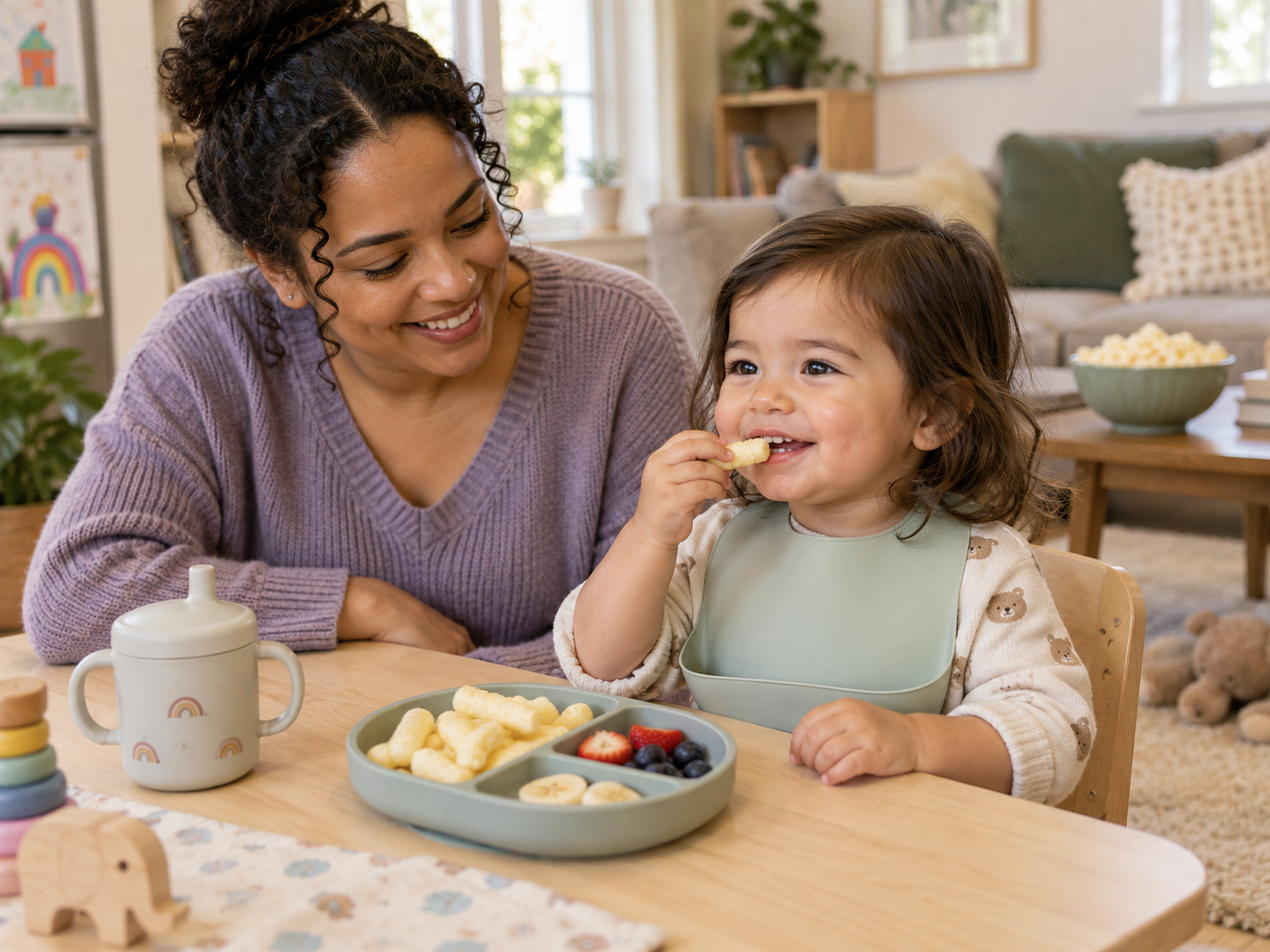
- Puffed corn snacks designed to dissolve easily
- Soft, dissolvable toddler snacks
- Age-appropriate crackers that soften easily in the mouth
- Other appropriately prepared snacks without hard kernels or hulls
Children can still participate in family movie night or special snack time without popcorn.
As with any food, children should be seated and supervised while eating, and foods should be appropriate for their developmental abilities.
A note for nannies and caregivers
How to address popcorn being offered
Nannies and other caregivers are often in a unique position. You may observe popcorn being offered by parents, relatives, or other adults even when you know that current pediatric guidance recommends waiting.
Addressing this does not need to feel confrontational.
A professional approach includes:
- Staying calm and nonjudgmental
- Framing the conversation around safety and development rather than personal preference
- Referencing pediatric guidance
- Offering alternatives instead of only pointing out the risk
Helpful language might sound like:
“I wanted to share a safety guideline I follow. The American Academy of Pediatrics lists popcorn as a choking hazard for young children and recommends avoiding high-risk foods until around age four or older, depending on development. I typically offer a safer alternative instead.”
Or:
“I noticed popcorn being offered and wanted to check in. Current pediatric choking-prevention guidance recommends waiting until at least four for popcorn. I’m happy to suggest some alternatives.”
Or simply:
“I follow age-based choking-safety recommendations while the children are in my care. Would you like me to keep popcorn off the menu for now and offer an alternative?”
When conversations are grounded in education and respect, they are far less likely to feel like criticism.
If a family chooses to offer popcorn themselves, nannies and caregivers can still:
- Follow current choking-prevention guidance during the hours the children are in their care
- Discuss food-safety expectations with parents
- Document agreed-upon safety practices when appropriate
- Continue modeling developmentally appropriate snack practices
Advocating for safety is part of professional childcare.
A note to parents and families
If this is new information to you, you are certainly not alone.
Parents and families receive an enormous amount of information about sleep, feeding, car seats, milestones, behavior, nutrition, and development, and choking hazards are not always discussed as frequently as they should be.
Learning something new gives us the opportunity to adjust.
Waiting to introduce a high-risk food is a small choice that can reduce a potentially serious risk.
What other foods does the AAP identify as choking hazards?
Popcorn is not the only food parents, nannies, and caregivers should think carefully about.
Current AAP guidance recommends keeping high-risk foods away from young children until age four or older, depending on the child’s development and maturity. Some foods can be made safer by changing their shape or preparation rather than avoiding them altogether.
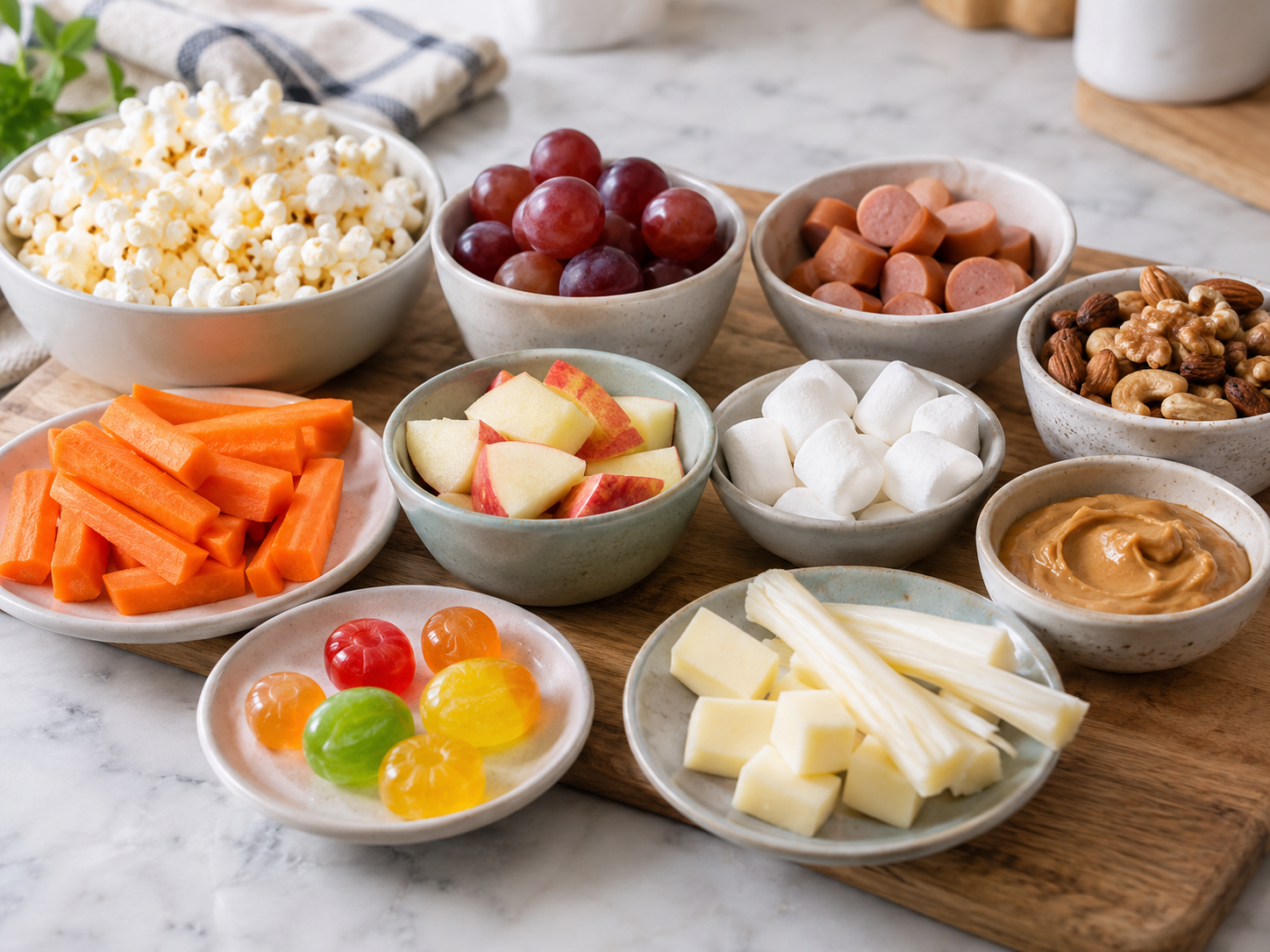
The AAP identifies the following foods as foods to avoid or modify for young children:
- Hot dogs — these can be served when appropriately cut rather than offered in round pieces
- Hard, gooey, or sticky candy
- Chewing gum
- Whole nuts
- Seeds, including sunflower seeds
- Whole grapes — these should be appropriately cut for young children
- Raw vegetables, such as carrot sticks
- Raw fruit chunks, such as pieces of apple
- Popcorn
- Thick chunks or spoonfuls of peanut butter or other nut butters — nut butter should be spread thinly instead
- Marshmallows
- Meat sticks and sausages
- Large chunks of meat
- Large chunks of cheese or string cheese
The shape and preparation of food matter. For example, the AAP notes that round, firm foods such as grapes and hot dogs can be offered when they are completely cut into appropriately small pieces.
For toddlers specifically, the AAP also cautions against large chunks of food and hard, round, or slippery foods, since these can be swallowed whole and obstruct the airway.
The takeaway
Popcorn can be a wonderful snack once a child is developmentally ready for it.
For younger children, the American Academy of Pediatrics recommends waiting until at least age four—and potentially longer depending on the individual child’s development and maturity.
Until then, awareness is one of the most powerful tools we have as parents, nannies, and caregivers.
When we know better, we can make better-informed choices.
And those choices help keep children safer.
Sources
American Academy of Pediatrics / HealthyChildren.org
- Choking Prevention for Babies & Children: What Every Parent Needs to Know. American Academy of Pediatrics.
- Building Balanced Snacks to Feed to Toddlers. HealthyChildren.org.
- Feeding & Nutrition Tips: Your 2-Year-Old. HealthyChildren.org.
Keep Reading
Child Development · Bedtime
Bedtime Reading: Why It Matters More Than You Think
Why a familiar story can support connection, language, regulation, and a calmer transition from the energy of the day into sleep.

Nanny Appreciation · Caregiver Relationships
When Appreciation Means Growing Together: Letting the Role Evolve Without Losing the Relationship
How genuine appreciation, mutual respect, and room for growth can help a nanny-family relationship evolve through changing seasons.
Caregiver Relationships
Navigating Caregiver Transitions: Supporting Children and Nannies with Ease
Practical ways to prepare, communicate, and protect a child’s sense of security when a trusted caregiver relationship begins or ends.
Coming soon
© the modern help | All Rights Reserved