When Did We Stop Letting Kids Rest? The Case for Bringing Quiet Time Back to Childhood
How changing kindergarten expectations, busy schedules, and fewer opportunities to slow down may be affecting our children's emotional well-being.
By Angie Knight · 14 min read
In this article
- Kindergarten Wasn't Always What It Is Today
- What Happened to Nap Time?
- Why Do Some Children Hold It Together All Day and Fall Apart at Home?
- Sleep Is a Biological Need, Not a Reward
- When Children Stop Napping, They Don't Stop Needing Rest
- Why Teaching Children to Rest Is an Important Life Skill
- How to Bring Rest Time Back Into Your Child's Day
- Maybe Childhood Needs a Little More Balance
- A Little Bumblebee With a Big Message About Rest
Think about how much we ask of young children today.
From the moment they wake up, many are moving from one expectation to the next. Getting ready for school, navigating busy classrooms, learning new skills, managing friendships, and transitioning between activities.
And when the school day ends, there may be extracurricular activities, family routines, and other responsibilities waiting for them.
For much of the 20th century, kindergarten was commonly a half-day experience. Today, full-day kindergarten is far more common, and academic expectations begin earlier.
As parents and educators, we want so much for our children. We want them to learn, grow, develop confidence, build friendships, and discover their abilities.
But sometimes, in our efforts to give children every opportunity, we may overlook something equally important.
Their need to rest.
Not necessarily to sleep. Not to sit perfectly still. And certainly not because they've earned a break by behaving well.
Simply because their developing bodies and minds need opportunities to recover.
So how did we get here? And what might happen if we made a little more room for rest in childhood again?
Kindergarten Wasn't Always What It Is Today
Kindergarten has changed considerably over the past several decades.
For many of today's parents and grandparents, kindergarten meant a shorter school day, learning through play, and a gentler introduction to formal education.
Today, full-day kindergarten is far more common, and academic expectations begin earlier.
Research helps illustrate just how much has changed.
| Measure | Earlier | Later |
|---|---|---|
| Children enrolled in full-day kindergarten (NCES) | 13.5% in 1970 | 80.8% in 2018 |
| Children enrolled in half-day kindergarten (NCES) | Approximately 86.5% in 1970 | Approximately 19% in 2018 |
| Teachers who believed children should learn to read in kindergarten (Bassok et al.) | 31% in 1998 | 80% in 2010 |
These numbers tell an important story.
Kindergarten has become both longer and more academically focused.
And while full-day kindergarten can provide meaningful benefits, including additional instructional time and learning opportunities, it's worth considering what may have become less available along the way.
Time for unstructured play.
Time to decompress.
Time to simply be five years old.
Children may be capable of learning more than we once expected, but that doesn't mean their developmental needs have disappeared.
What Happened to Nap Time?
There was a time when an afternoon nap or rest period was a familiar part of many young children's routines.
Today, opportunities for rest vary considerably between schools and classrooms. As academic demands have increased, some full-day programs have shortened or eliminated designated rest periods.
A 2010 doctoral study examining children's transition into all-day kindergarten offers an interesting perspective.
In this study, children who had previously napped lost daytime sleep when their school schedules changed, while children who didn't nap experienced reductions in nighttime sleep. The findings were also consistent with increased sleepiness following the transition.
It's important to recognize that this was a single doctoral dissertation, not a large body of research establishing that full-day kindergarten causes sleep loss. Still, it raises worthwhile questions about how changes in school schedules may affect children's opportunities for sleep and rest.
Of course, this doesn't mean every kindergartner needs a nap.
In fact, research suggests that most children stop napping by around age five, although there is considerable individual variation. Where children spend their days, including whether their school or childcare setting offers nap opportunities, can also influence when napping ends.
And for some children, daytime naps can make bedtime more difficult.
But here's an important distinction:
Outgrowing a nap doesn't mean outgrowing the need for rest.
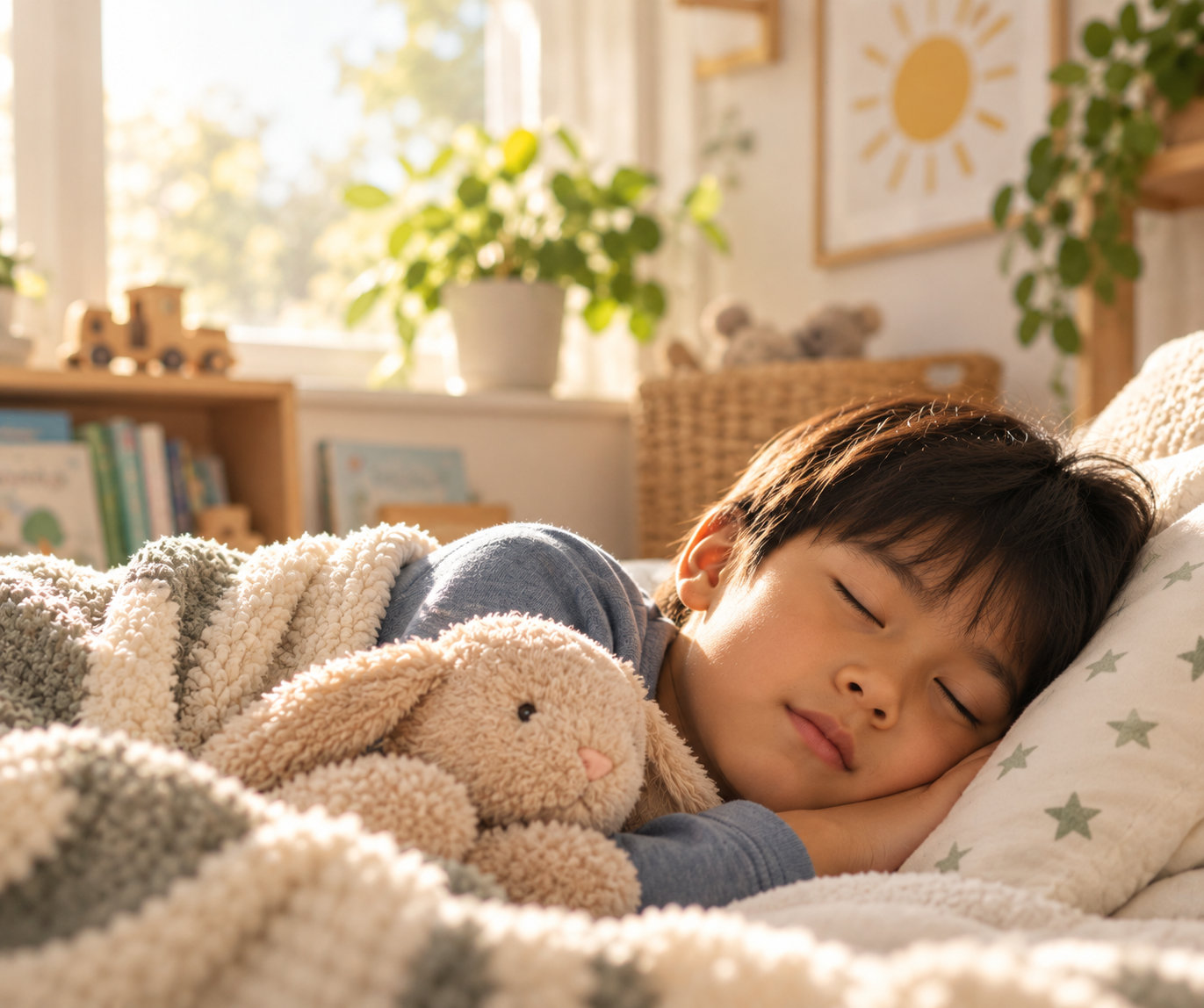
A child who no longer falls asleep after lunch may still benefit from a little quiet time, a break from stimulation, or an opportunity to engage in something peaceful without expectations or demands.
Rest doesn't have to mean sleep.
Sometimes, it simply means giving a child a chance to slow down.
Why Do Some Children Hold It Together All Day and Fall Apart at Home?
If you've ever picked up your child from school and wondered why the happy, cooperative child their teacher described seems to disappear the moment they get home, you're certainly not alone.
Perhaps your child had a wonderful day at school.
They followed directions, participated in activities, played with friends, and managed the many expectations of their classroom.
Then they get home.
Their snack breaks in half, and suddenly they're in tears.
You ask them to put their shoes away, and they become frustrated.
A small disappointment turns into a very big emotional reaction.
It's easy to wonder, Where is this coming from?
But when we look at the day through a child's developmental lens, these moments can begin to make more sense.
Young children are still developing the executive functioning skills that allow them to manage frustration, regulate emotions, shift attention, control impulses, and adapt to changing expectations.
These abilities take years to develop.
And an ordinary school day asks children to use them repeatedly.
Consider everything a young child may navigate before they even arrive home:
- Busy classrooms filled with sounds, movement, and social interaction
- Following directions and remembering routines
- Managing friendships, disagreements, and disappointments
- Transitioning between activities
- Sitting, listening, and maintaining attention
- Processing new academic information
- Managing excitement, frustration, and other big feelings
That's a tremendous amount of work for a developing brain.
For children with sensory sensitivities, neurodevelopmental differences, or challenges with transitions and emotional regulation, these demands can feel especially intense.
By the time they arrive home, they may have very little energy left for managing another expectation.
And sometimes, the smallest frustration becomes the one that feels impossible to handle.
Before we interpret a child's behavior as defiance, it's worth asking whether they might be overwhelmed, overtired, or simply in need of connection and recovery.
Behavior is communication.
And sometimes, what children are communicating is that they've had enough for one day.

Sleep Is a Biological Need, Not a Reward
Sleep isn't something children earn by having a good day.
It's a fundamental biological need that supports their growth, development, learning, and emotional well-being.
The American Academy of Sleep Medicine, with recommendations endorsed by the American Academy of Pediatrics, recommends the following amounts of sleep:
| Age | Recommended sleep per 24 hours |
|---|---|
| 1–2 years | 11–14 hours, including naps |
| 3–5 years | 10–13 hours, including naps |
| 6–12 years | 9–12 hours |
Adequate sleep is associated with better attention, learning, memory, behavior, and emotional regulation.
Sleep also plays an important role in physical growth, brain development, and memory consolidation.
But here's something parents don't always realize.
An overtired child doesn't necessarily look sleepy.
Sometimes, an overtired child can appear more energetic, restless, impulsive, irritable, or emotionally reactive.
These behaviors aren't specific signs of insufficient sleep, and they can have many different causes. But sleep is one important piece of the picture worth considering.
It's understandable that we might interpret these behaviors as a need for more physical activity or stronger behavioral expectations.
But sometimes, the most supportive response isn't another activity.
It's less stimulation, an earlier bedtime, a calmer environment, or simply an opportunity to slow down.
When Children Stop Napping, They Don't Stop Needing Rest
As children grow, their sleep patterns naturally change.
Babies need multiple naps. Toddlers typically transition to one nap. Preschoolers gradually begin to outgrow daytime sleep.
A 2020 systematic review and meta-analysis by Staton and colleagues found that approximately 94% of children stop napping by age five, although there is considerable individual variation.
Importantly, these patterns are influenced not only by children's development but also by their environments, including whether childcare and school settings provide opportunities to nap.
This is a normal part of childhood, but the timing varies from child to child.
And I think it's important that we don't confuse no longer napping with no longer benefiting from a break.
Imagine spending an entire day learning new information, navigating social relationships, following instructions, managing emotions, and moving from one responsibility to the next.
Most adults would welcome a little time to decompress afterward.
Our children are no different.
A predictable quiet-time routine can offer a gentle opportunity to step away from stimulation and reconnect with a calmer pace.
And while the scientific evidence supporting adequate sleep is well established, research is less conclusive about whether a specific quiet-time routine independently improves emotional regulation.
That distinction matters.
Quiet time isn't a treatment or a guaranteed solution for challenging behavior.
Rather, it's a practical, developmentally respectful way to create space for rest and recovery.
And when it's introduced with flexibility, warmth, and realistic expectations, it can become a comforting part of a child's day.
Why Teaching Children to Rest Is an Important Life Skill
Think about how often children hear messages encouraging them to keep moving.
Hurry up.
Pay attention.
Finish your work.
Get ready for the next activity.
We have somewhere to be.
These expectations are a natural part of everyday life, and children do need opportunities to develop responsibility, independence, and perseverance.
But they also need to learn something else.
How to recognize when their bodies and minds need a break.
As parents and caregivers, we spend a great deal of time teaching children what to do.
We teach them to brush their teeth, wash their hands, eat nutritious foods, and practice healthy habits.
Yet recognizing the need for rest is a healthy habit, too.
Children can gradually learn to ask themselves:
How does my body feel right now?
Am I tired, overwhelmed, or frustrated?
Would a little quiet time help me feel better?
What helps me feel calm and comfortable?
These are early self-awareness and self-regulation skills.
And like so many developmental skills, they grow through repeated experiences, supportive relationships, and opportunities to practice.
We can't simply tell a child to calm down and expect them to know how.
We have to help them discover what calming down feels like.
Rest time can become one of those opportunities.
Not as a punishment.
Not as a consequence for challenging behavior.
And not as another task children must complete perfectly.
But as a gentle reminder that caring for ourselves includes knowing when to pause.
How to Bring Rest Time Back Into Your Child's Day
The good news is that introducing quiet time doesn't require an elaborate routine.
You don't need a perfectly decorated calm corner, an hour of silence, or a child who willingly lies still.
You simply need a little consistency, patience, and flexibility.
Here are seven ways to get started.
1. Create a Predictable Rhythm
Children often feel more secure when they know what to expect.
Consider introducing quiet time after lunch, following preschool pickup, or during another natural transition in the day.
A simple invitation such as, "We've had a busy morning. Let's give our bodies a little time to rest," can help children begin to understand the purpose.
2. Start Small
If your child isn't accustomed to quiet time, expecting them to rest independently for 45 minutes may feel overwhelming.
Start with five or ten minutes.
Gradually increase the time if your child is comfortable and benefiting from the routine.
Remember, we're building a healthy habit, not testing how long a child can sit still.
3. Offer Calming Choices
Quiet time doesn't have to mean lying in bed.
Depending on your child's age, interests, and developmental needs, they might enjoy:
- Looking through picture books
- Listening to gentle music or an audiobook
- Coloring or drawing
- Cuddling with a favorite stuffed animal
- Resting comfortably with a blanket
- Sitting quietly with a caregiver
Giving children a few appropriate choices can help them feel involved rather than controlled.
4. Reduce Unnecessary Stimulation
Consider lowering the lights, reducing background noise, and putting screens away.
The goal is to create an environment that feels noticeably calmer than the rest of the day.
For some children, a familiar song or predictable transition cue can make the shift easier.
5. Remember That Some Children Need Movement Before Stillness
Not every child finds sitting quietly relaxing.
Some children, particularly those with sensory differences or high movement needs, may benefit from gentle stretching, rocking, or another calming movement activity before settling.
There's no single way every child's body experiences rest.
What matters is finding an approach that supports your individual child.
6. Protect Nighttime Sleep
For children who still occasionally fall asleep during rest time, pay attention to how daytime sleep may be affecting their nights.
A systematic review by Thorpe and colleagues found that napping beyond age two has been associated with later bedtimes and shorter or poorer nighttime sleep.
This doesn't mean naps are harmful or that children should stop napping at a particular age.
It simply reminds us that sleep needs change as children develop, and daytime rest should be responsive to the individual child.
If your child still naps, consider whether the timing and duration are working well with their nighttime sleep. If naps consistently interfere with bedtime, adjusting the routine may be helpful.
And remember, quiet time doesn't have to involve falling asleep to be worthwhile.
7. Model Rest Yourself
This may be one of the most meaningful things we can do.
Children learn so much from watching the adults around them.
When we constantly rush from one responsibility to another, they notice.
But when we occasionally say, "I'm feeling a little tired, so I'm going to sit and read for a few minutes," we're showing them that rest is a normal, healthy part of life.
And perhaps most importantly, don't turn quiet time into another performance expectation.
Your child doesn't need to lie perfectly still, remain completely silent, or fall asleep for rest time to be worthwhile.
The goal is to help them experience slowing down as something safe, comforting, and supportive.
Maybe Childhood Needs a Little More Balance
We live in a world that places tremendous value on achievement, productivity, and staying busy.
And as parents, it's natural to want to provide our children with opportunities to learn, explore their interests, and reach their potential.
There's nothing wrong with wanting those things.
But I also think it's worth asking whether we've become so focused on helping children do more that we've forgotten to protect time for them to simply be.
Time to play without a schedule.
Time to connect without distractions.
Time to explore without an objective.
And time to rest without feeling that they should be doing something else.
A full calendar isn't necessarily a more fulfilling childhood.
And a child who is constantly occupied isn't necessarily a child whose developmental needs are being met.
Healthy development isn't just about how much children can accomplish. It's also about giving them the support, connection, sleep, and opportunities for recovery they need along the way.
The ability to recognize our limits, respond to our needs, and give ourselves permission to slow down is something many adults are still learning.
What a gift it would be to begin teaching our children those skills early.
A Little Bumblebee With a Big Message About Rest
One of the reasons I wrote The Little Bumblebee Who Couldn't Stop Buzzing was because I wanted to help children understand something that can be surprisingly difficult to teach:
It's okay to slow down.
As a pediatric sleep consultant, parent educator, and mother, I understand how challenging it can be to help an energetic, curious child transition from playing, exploring, and learning into a period of rest.
Children have so much they want to discover.
Their imaginations are busy. Their bodies want to move. And sometimes, the idea of stopping feels like the very last thing they want to do.
Simply telling a child to "go rest" doesn't always help them understand why rest matters or how to begin.
That's where stories can be so meaningful.
The Little Bumblebee Who Couldn't Stop Buzzing offers young children and their caregivers a gentle, relatable way to explore the importance of slowing down and listening to their bodies.
Whether your family is navigating the transition away from naps, introducing quiet time, or simply looking for a positive way to talk about rest, the story can become part of a comforting daily ritual.
Because teaching children to rest isn't about making them less energetic, less curious, or less enthusiastic about life.
It's about helping them understand that they can be all of those wonderful things while still taking care of themselves.
Our children don't need to stop buzzing with curiosity. They just need to know that it's okay to rest their wings. 🐝💛
Big feelings. Little minds. A gentler way to slow down.
The Little Bumblebee Who Couldn't Stop Buzzing by Angie Knight is available now on Amazon.

Research Sources
- National Center for Education Statistics. Digest of Education Statistics, Table 202.10. Enrollment in preprimary programs, 1970–2018.
- Bassok, D., Latham, S., & Rorem, A. (2016). Is Kindergarten the New First Grade? AERA Open.
- Paruthi, S., et al. (2016). Recommended Amount of Sleep for Pediatric Populations: A Consensus Statement of the American Academy of Sleep Medicine. Journal of Clinical Sleep Medicine.
- Staton, S., et al. (2020). Many Naps, One Nap, None: A Systematic Review and Meta-Analysis of Napping Patterns in Children 0–12 Years. Sleep Medicine Reviews.
- Cairns, A. A. (2010). Implications of Napping Into and Beyond Kindergarten on Sleep, Diet, and the Awakening Cortisol Response. Doctoral dissertation, University of Southern Mississippi.
- Thorpe, K., et al. (2015). Napping, Development and Health From 0 to 5 Years: A Systematic Review. Archives of Disease in Childhood.
Further Reading
- American Academy of Pediatrics. The Power of Play: A Pediatric Role in Enhancing Development in Young Children.
- American Academy of Pediatrics (2026). The Crucial Role of Recess in School. Pediatrics.
Keep Reading
Child Development · Bedtime
Bedtime Reading: Why It Matters More Than You Think
Why a familiar story can support connection, language, regulation, and a calmer transition from the energy of the day into sleep.

Nanny Appreciation · Caregiver Relationships
When Appreciation Means Growing Together: Letting the Role Evolve Without Losing the Relationship
How genuine appreciation, mutual respect, and room for growth can help a nanny-family relationship evolve through changing seasons.

Child Safety · Feeding
Why Popcorn Is Still a “Wait Until 4” Food
A clear explanation of why popcorn remains a choking concern for young children and how caregivers can approach food safety with confidence.
© the modern help | All Rights Reserved