When Naps End: How to Create a Gentle Quiet Time Routine
Seven practical ways to introduce quiet time, respect changing sleep needs, and help children learn to slow down.
By Angie Knight · 7 min read
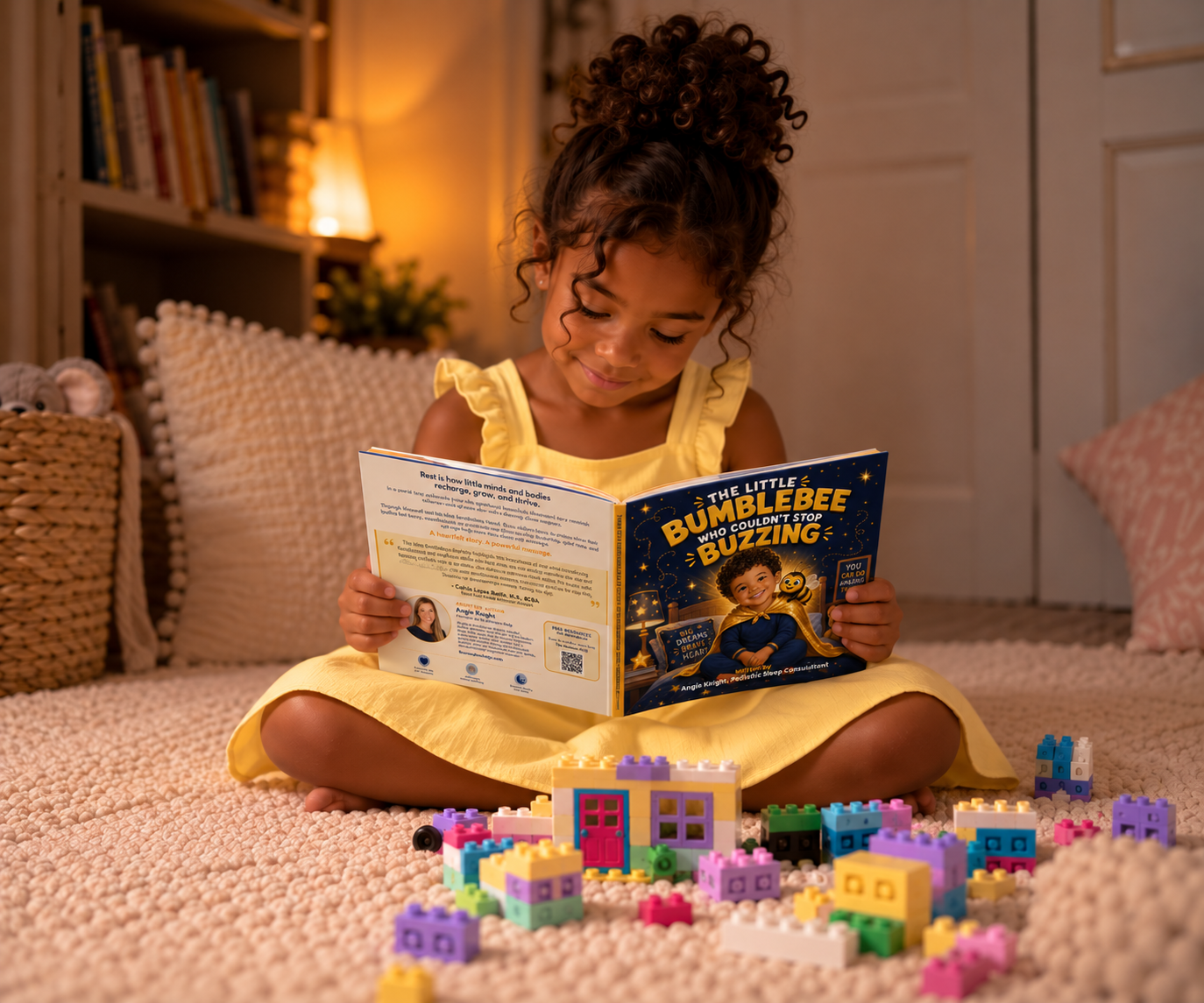
This is the practical follow-up to When Did We Stop Letting Kids Rest?, which explores why rest has become harder to find in childhood.
When Children Stop Napping, They Don’t Stop Needing Rest
As children grow, their sleep patterns naturally change.
Babies need multiple naps. Toddlers typically transition to one nap. Preschoolers gradually begin to outgrow daytime sleep.
A 2020 systematic review and meta-analysis by Staton and colleagues found that approximately 94% of children stop napping by age five, although there is considerable individual variation.
Importantly, these patterns are influenced not only by children’s development but also by their environments, including whether childcare and school settings provide opportunities to nap.
This is a normal part of childhood, but the timing varies from child to child.
And I think it’s important that we don’t confuse no longer napping with no longer benefiting from a break.
Imagine spending an entire day learning new information, navigating social relationships, following instructions, managing emotions, and moving from one responsibility to the next.
Most adults would welcome a little time to decompress afterward.
Our children are no different.
A predictable quiet-time routine can offer a gentle opportunity to step away from stimulation and reconnect with a calmer pace.
And while the scientific evidence supporting adequate sleep is well established, research is less conclusive about whether a specific quiet-time routine independently improves emotional regulation.
That distinction matters.
Quiet time isn’t a treatment or a guaranteed solution for challenging behavior.
Rather, it’s a practical, developmentally respectful way to create space for rest and recovery.
And when it’s introduced with flexibility, warmth, and realistic expectations, it can become a comforting part of a child’s day.
Why Teaching Children to Rest Is an Important Life Skill
Think about how often children hear messages encouraging them to keep moving.
Hurry up.
Pay attention.
Finish your work.
Get ready for the next activity.
We have somewhere to be.
These expectations are a natural part of everyday life, and children do need opportunities to develop responsibility, independence, and perseverance.
But they also need to learn something else.
How to recognize when their bodies and minds need a break.
As parents and caregivers, we spend a great deal of time teaching children what to do.
We teach them to brush their teeth, wash their hands, eat nutritious foods, and practice healthy habits.
Yet recognizing the need for rest is a healthy habit, too.
Children can gradually learn to ask themselves:
How does my body feel right now?
Am I tired, overwhelmed, or frustrated?
Would a little quiet time help me feel better?
What helps me feel calm and comfortable?
These are early self-awareness and self-regulation skills.
And like so many developmental skills, they grow through repeated experiences, supportive relationships, and opportunities to practice.
We can’t simply tell a child to calm down and expect them to know how.
We have to help them discover what calming down feels like.
Rest time can become one of those opportunities. Not as a punishment, not as a consequence for challenging behavior, and not as another task children must complete perfectly, but as a gentle reminder that caring for ourselves includes knowing when to pause.
How to Bring Rest Time Back Into Your Child’s Day
The good news is that introducing quiet time doesn’t require an elaborate routine.
You don’t need a perfectly decorated calm corner, an hour of silence, or a child who willingly lies still.
You simply need a little consistency, patience, and flexibility.
Here are seven ways to get started.
1. Create a Predictable Rhythm
Children often feel more secure when they know what to expect.
Consider introducing quiet time after lunch, following preschool pickup, or during another natural transition in the day.
A simple invitation such as, "We’ve had a busy morning. Let’s give our bodies a little time to rest," can help children begin to understand the purpose.
2. Start Small
If your child isn’t accustomed to quiet time, expecting them to rest independently for 45 minutes may feel overwhelming.
Start with five or ten minutes.
Gradually increase the time if your child is comfortable and benefiting from the routine.
Remember, we’re building a healthy habit, not testing how long a child can sit still.
3. Offer Calming Choices
Quiet time doesn’t have to mean lying in bed.
Depending on your child’s age, interests, and developmental needs, they might enjoy:
- Looking through picture books
- Listening to gentle music or an audiobook
- Coloring or drawing
- Cuddling with a favorite stuffed animal
- Resting comfortably with a blanket
- Sitting quietly with a caregiver
Giving children a few appropriate choices can help them feel involved rather than controlled.
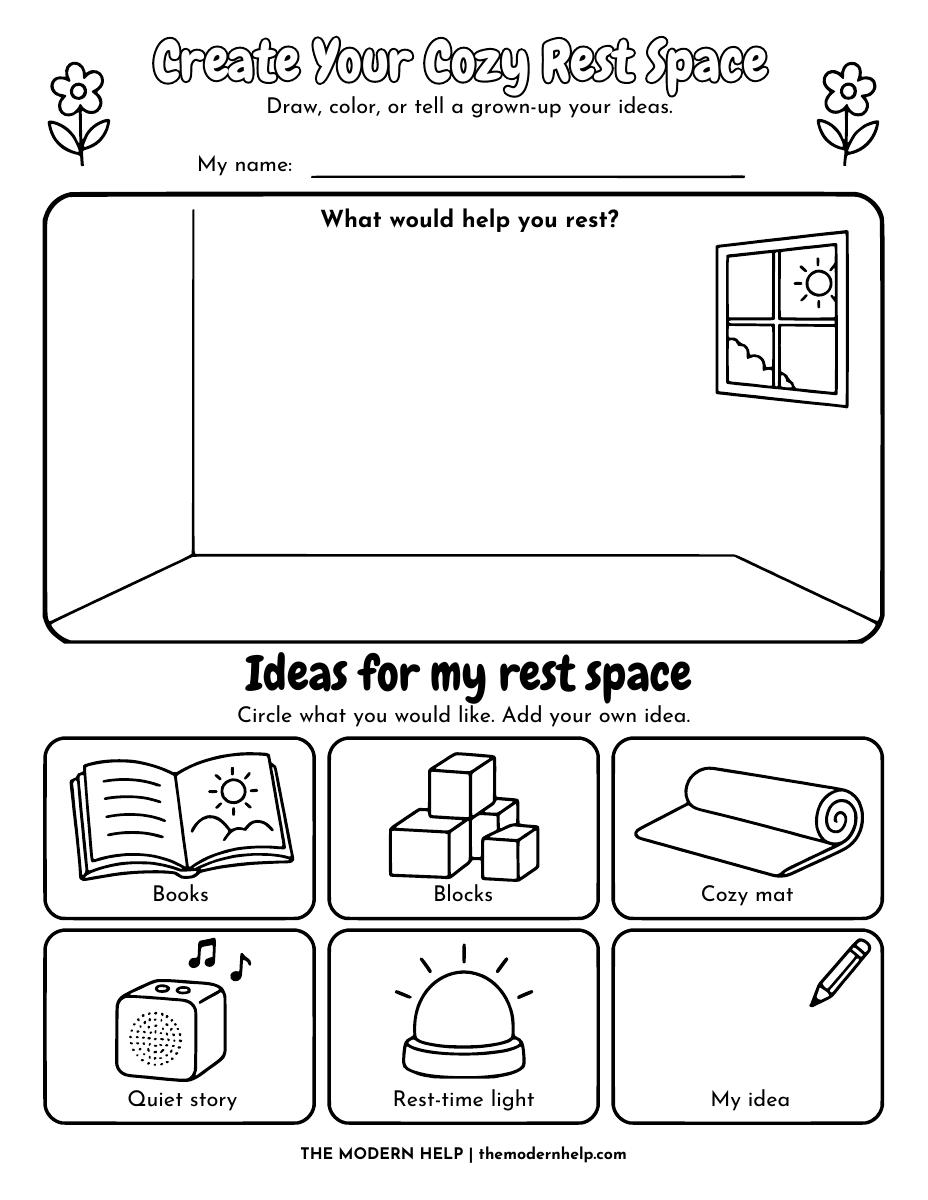
For a fun way to begin, try the free Cozy Rest Space printable below, where your child can draw and choose what they’d like in their own rest space.
4. Reduce Unnecessary Stimulation
Consider lowering the lights, reducing background noise, and putting screens away.
The goal is to create an environment that feels noticeably calmer than the rest of the day.
For some children, a familiar song or predictable transition cue can make the shift easier.
5. Remember That Some Children Need Movement Before Stillness
Not every child finds sitting quietly relaxing.
Some children, particularly those with sensory differences or high movement needs, may benefit from gentle stretching, rocking, or another calming movement activity before settling.
There’s no single way every child’s body experiences rest.
What matters is finding an approach that supports your individual child.
6. Protect Nighttime Sleep
For children who still occasionally fall asleep during rest time, pay attention to how daytime sleep may be affecting their nights.
A systematic review by Thorpe and colleagues found that napping beyond age two has been associated with later bedtimes and shorter or poorer nighttime sleep.
This doesn’t mean naps are harmful or that children should stop napping at a particular age.
It simply reminds us that sleep needs change as children develop, and daytime rest should be responsive to the individual child.
If your child still naps, consider whether the timing and duration are working well with their nighttime sleep. If naps consistently interfere with bedtime, adjusting the routine may be helpful.
If bedtime struggles persist despite these adjustments, it may be worth talking with your child’s pediatrician or a pediatric sleep consultant.
And remember, quiet time doesn’t have to involve falling asleep to be worthwhile.
7. Model Rest Yourself
This may be one of the most meaningful things we can do.
Children learn so much from watching the adults around them.
When we constantly rush from one responsibility to another, they notice.
But when we occasionally say, "I’m feeling a little tired, so I’m going to sit and read for a few minutes," we’re showing them that rest is a normal, healthy part of life.
And perhaps most importantly, don’t turn quiet time into another performance expectation.
Your child doesn’t need to lie perfectly still, remain completely silent, or fall asleep for rest time to be worthwhile.
The goal is to help them experience slowing down as something safe, comforting, and supportive.
Create Your Cozy Rest Space
Invite your child to imagine a little spot that feels welcoming and comforting. With this printable activity, they can draw, color, circle their favorite ideas, or tell a grown-up what they would like in their own rest space.
Let their ideas lead the way. Choose a favorite book, make room for a cozy mat, or dream up something of their own. Then pick one simple idea to try together, using what you already have at home. There’s no perfect setup—the fun is creating a space that feels like theirs.
A Little Bumblebee With a Big Message About Rest
One of the reasons I wrote The Little Bumblebee Who Couldn’t Stop Buzzing was because I wanted to help children understand something that can be surprisingly difficult to teach:
It’s okay to slow down.
As a pediatric sleep consultant, parent educator, and mother, I understand how challenging it can be to help an energetic, curious child transition from playing, exploring, and learning into a period of rest.
Simply telling a child to "go rest" doesn’t always help them understand why rest matters or how to begin.
The Little Bumblebee Who Couldn’t Stop Buzzing offers young children and their caregivers a gentle, relatable way to explore the importance of slowing down and listening to their bodies.
Whether your family is navigating the transition away from naps, introducing quiet time, or simply looking for a positive way to talk about rest, the story can become part of a comforting daily ritual.
Because teaching children to rest isn’t about making them less energetic, less curious, or less enthusiastic about life.
It’s about helping them understand that they can be all of those wonderful things while still taking care of themselves.
Our children don’t need to stop buzzing with curiosity. They just need to know that it’s okay to rest their wings. 🐝

A story to share at rest time
The Little Bumblebee
Who Couldn’t Stop Buzzing
A gentle story to help little ones explore slowing down, listening to their bodies, and resting their wings.
Available on Amazon
Buy Now on AmazonFor the wider context behind protecting rest, read When Did We Stop Letting Kids Rest?.
Research Sources
- Staton, S., et al. (2020). Many Naps, One Nap, None: A Systematic Review and Meta-Analysis of Napping Patterns in Children 0–12 Years. Sleep Medicine Reviews.
- Thorpe, K., et al. (2015). Napping, Development and Health From 0 to 5 Years: A Systematic Review. Archives of Disease in Childhood.
Further Reading
- American Academy of Pediatrics. The Power of Play: A Pediatric Role in Enhancing Development in Young Children.
- American Academy of Pediatrics (2026). The Crucial Role of Recess in School. Pediatrics.
Keep Reading
Child Development · Bedtime
Bedtime Reading: Why It Matters More Than You Think
Why a familiar story can support connection, language, regulation, and a calmer transition from the energy of the day into sleep.

Nanny Appreciation · Caregiver Relationships
When Appreciation Means Growing Together: Letting the Role Evolve Without Losing the Relationship
How genuine appreciation, mutual respect, and room for growth can help a nanny-family relationship evolve through changing seasons.

Child Safety · Feeding
Why Popcorn Is Still a “Wait Until 4” Food
A clear explanation of why popcorn remains a choking concern for young children and how caregivers can approach food safety with confidence.
© the modern help | All Rights Reserved